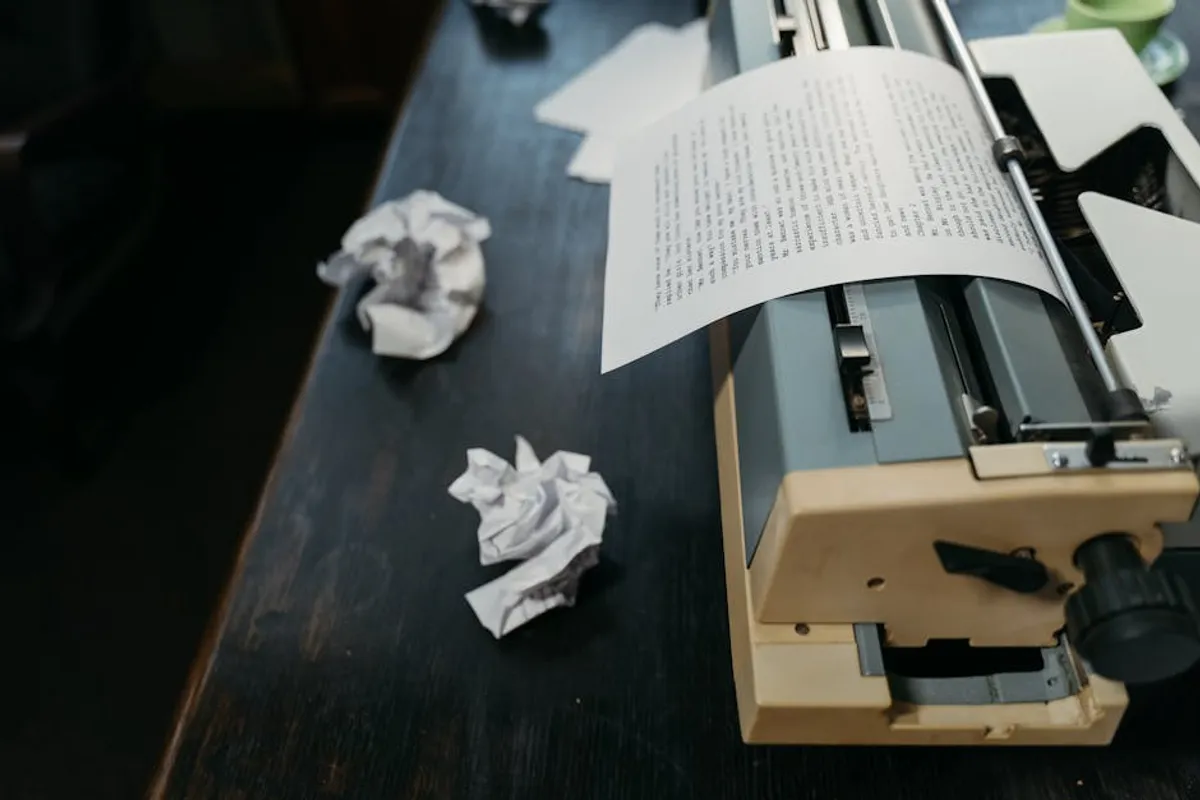
For writers, the consistent generation of new ideas and the refinement of craft are not optional, but fundamental to sustained output and professional growth. Writing prompts serve as targeted exercises, designed to activate specific creative muscles, break through conceptual impasses, and develop versatility across various narrative and stylistic demands. This curated selection focuses on prompt exercises that offer tangible benefits for skill development, idea generation, and overcoming common writing challenges, moving beyond generic suggestions to provide concrete approaches for measurable improvement. These prompts are designed to aid in developing consistent creative routines that foster sustained output and professional growth.
How to Select the Right Writing Prompt Exercise
Choosing an effective writing prompt exercise involves aligning the prompt's objective with your current writing goals. Consider whether you need to develop a specific skill, such as dialogue or descriptive language, or if you aim to generate new story concepts or overcome writer's block. The most beneficial prompts are those that push you slightly beyond your comfort zone, encouraging experimentation without overwhelming you. Evaluate prompts based on their potential to stimulate divergent thinking, explore unfamiliar perspectives, or practice a particular literary device. A prompt that feels too easy may not challenge you sufficiently, while one that is too broad might lead to aimless writing. Seek exercises with a clear, actionable directive that can be completed within a defined timeframe, allowing for consistent practice and self-assessment.
1. Sensory Detail Prompts
This category of prompts focuses exclusively on engaging the five senses to build vivid, immersive descriptions. Exercises typically involve selecting an object, a place, or a memory and then detailing it using only sensory input: what is seen, heard, smelled, tasted, and felt. The goal is to move beyond abstract adjectives and instead ground the writing in concrete, observable data, forcing the writer to pay close attention to the physical world and translate those observations into evocative prose.
Best for: Writers seeking to enrich their descriptive passages, improve world-building authenticity, or make characters' experiences more tangible to the reader.
Pros: Directly addresses a common weakness in early writing; trains observational skills; helps ground fantastical or abstract concepts in reality; enhances reader immersion.
Cons: Can feel restrictive if not balanced with broader narrative goals; may initially lead to overly detailed but plot-less writing if not integrated carefully into larger projects.
Verdict: Essential for developing a fundamental skill. Consistent practice with sensory prompts refines a writer's ability to show, not tell, and creates a more immediate, impactful reading experience.
2. Character-Driven Scenarios
These exercises place a specific character (either pre-defined or newly created) into an unexpected or challenging situation, demanding that the writer explore their reactions, motivations, and internal monologue. Prompts might involve a character encountering a moral dilemma, facing a sudden loss, or being forced to make a difficult choice. The emphasis is on psychological depth and consistency, pushing writers to understand how personality, past experiences, and core values dictate behavior under pressure. This type of exercise is excellent for exploring character motivations and reactions when placed under duress.
Best for: Developing complex, believable characters; exploring character arcs; understanding internal conflict; generating plot points from character decisions.
Pros: Directly improves characterization, a cornerstone of compelling storytelling; helps writers avoid flat or inconsistent characters; can reveal unexpected story directions.
Cons: Requires a solid initial understanding of character psychology; can devolve into mere exposition if not focused on active choices and reactions.
Verdict: Crucial for any narrative writer. Mastering character-driven scenarios builds the foundation for stories that resonate because their inhabitants feel real and their struggles meaningful.
3. Dialogue-Focused Exchanges
Dialogue prompts isolate conversations, often without much narrative context, to hone the craft of realistic and purposeful speech. Exercises might involve two characters with conflicting goals discussing a mundane topic, a conversation filled with subtext, or a rapid-fire exchange under duress. The objective is to make dialogue sound natural, reveal character, advance plot, and convey information efficiently, avoiding exposition dumps or artificial exchanges.
Best for: Writers struggling with stilted or unnatural-sounding conversations; improving pacing through dialogue; conveying information indirectly; developing character voice.
Pros: Directly improves one of the most challenging aspects of writing; helps differentiate character voices; teaches economy of language; reveals character through indirect means.
Cons: Can be difficult to make engaging without surrounding narrative; risks creating dialogue that is too realistic and thus uninteresting if not carefully crafted.
Verdict: Indispensable for narrative writers. Effective dialogue is a hallmark of professional writing, and these prompts provide a dedicated arena for its development.
4. Perspective Shift Exercises
These prompts challenge writers to tell the same story, describe the same event, or portray the same character from multiple viewpoints. This could involve switching from first-person to third-person limited, or from an omniscient narrator to a specific character's internal perspective. The goal is to understand how point of view shapes narrative, influences reader perception, and reveals different facets of a situation or individual.
Best for: Gaining flexibility in narrative voice; exploring themes of subjectivity and truth; understanding how perspective impacts empathy and judgment; enriching complex narratives.
Pros: Broadens a writer's narrative toolkit; helps avoid a singular, potentially biased viewpoint; useful for developing unreliable narrators or layered storytelling.
Cons: Can be conceptually challenging to execute effectively; requires a strong grasp of narrative distance and voice to avoid confusion.
Verdict: A powerful exercise for advanced writers or those looking to add sophistication to their storytelling. It reveals the strategic power of choosing the right narrative lens.
5. Time-Constrained Sprints
These exercises involve writing continuously for a set, short period (e.g., 5, 10, or 15 minutes) on a given topic or initial sentence, without editing or pausing. The primary goal is to bypass the inner critic, generate raw material, and build writing stamina. The focus is on quantity over quality in the initial burst, encouraging free association and uninhibited expression.
Best for: Overcoming writer's block; developing creative fluency; improving drafting speed; generating initial ideas without self-censorship.
Pros: Highly effective for breaking through creative paralysis; builds discipline and consistency; produces a large volume of raw text that can be mined for ideas later.
Cons: The output is often unpolished and requires significant revision; can feel unproductive if the writer expects immediate publishable results.
Verdict: An excellent tool for productivity and overcoming inertia. While not producing finished pieces, it’s invaluable for fostering a consistent writing habit and generating initial concepts.
6. "What If" Scenario Prompts
These prompts begin with a speculative question, often involving a departure from reality or a significant alteration of a known event. Examples include: "What if gravity suddenly reversed for five minutes?" or "What if your pet could speak only in riddles?" The purpose is to ignite imagination, explore consequences, and develop logical (or illogical) narrative progressions from a single speculative premise.
Best for: Generating high-concept story ideas; exploring speculative fiction or fantasy elements; developing plot causality; fostering creative problem-solving within a narrative.
Pros: Excellent for sparking original ideas; encourages imaginative thinking beyond conventional plots; helps writers think through cause-and-effect in unusual circumstances.
Cons: Can lead to outlandish or ungrounded stories if not paired with some form of internal logic; requires a willingness to embrace the absurd.
Verdict: A fertile ground for innovation, particularly for genre writers. These prompts train the mind to construct narratives from a single, compelling divergence.
7. Flash Fiction Starters
Flash fiction prompts typically provide a very short opening sentence, a specific image, or a constraint (e.g., "write a story in exactly 100 words") designed to kickstart a complete, miniature narrative. The challenge lies in developing character, plot, and resolution within severe word limits, demanding conciseness, impactful language, and efficient storytelling.
Best for: Practicing brevity and economy of language; developing strong beginnings and satisfying endings; mastering impactful storytelling within tight constraints; generating self-contained story ideas.
Pros: Teaches precision and intentional word choice; excellent for quick, satisfying creative bursts; helps identify core narrative elements; builds discipline.
Cons: The extreme brevity can be frustrating for writers accustomed to longer forms; risks superficiality if not executed with skill.
Verdict: Highly recommended for honing narrative efficiency. The ability to craft a complete story in miniature translates directly to stronger scenes and tighter pacing in longer works.
8. Image-Based Inspiration
These prompts use a visual stimulus—a photograph, a piece of art, or even a random object—as the starting point for writing. Writers are encouraged to describe what they see, but then to delve deeper into the implied story, the emotions evoked, the history suggested, or the future consequences. The goal is to translate visual information into narrative and emotional content.
Best for: Overcoming visual writer's block; developing descriptive skills; generating ideas from non-textual sources; exploring symbolism and metaphor.
Pros: Engages a different part of the brain than text-based prompts; provides immediate, concrete inspiration; helps writers to "see" their stories more clearly.
Cons: Can lead to purely descriptive writing without narrative progression if not guided towards story; requires access to a varied image library.
Verdict: A versatile tool for stimulating creativity and improving descriptive capabilities. It bridges the gap between observation and imaginative storytelling.
9. Genre-Specific Challenges
These prompts are tailored to the conventions and expectations of a particular genre (e.g., mystery, romance, sci-fi, horror). A mystery prompt might involve a specific clue and a red herring; a romance prompt, a meet-cute with an unexpected twist. The objective is to practice working within genre frameworks, understanding tropes, and subverting expectations while still delivering a satisfying experience for genre readers.
Best for: Writers specializing in or exploring a particular genre; understanding genre conventions; practicing genre-specific pacing and plot devices; developing commercial viability within a genre.
Pros: Directly applicable to professional genre writing; helps writers learn the "rules" before breaking them; useful for building a portfolio in a specific market.
Cons: Can feel formulaic if not approached with a creative mindset; might reinforce tropes rather than fostering originality if not used thoughtfully.
Verdict: Essential for genre writers. These exercises provide a structured way to practice the specific demands and pleasures of their chosen field.
10. Emotional Arc Exploration
These prompts focus on charting a character's emotional journey through a specific event or short period. Writers are given a starting emotion and an ending emotion, and must craft a scene or micro-story that convincingly shows the transition between them. The emphasis is on internal experience, subtle shifts in feeling, and the external actions that reflect or cause emotional change.
Best for: Deepening character emotionality; understanding the nuances of human feeling; practicing showing internal states rather than just telling; creating relatable characters.
Pros: Improves emotional intelligence in writing; makes characters more empathetic and their struggles more impactful; directly addresses reader connection.
Cons: Can become melodramatic or superficial if not handled with care; requires a strong understanding of emotional psychology.
Verdict: Fundamental for creating resonant stories. Characters whose emotional journeys are well-defined and believable are often the ones readers remember most.
11. World-Building Questions
These prompts are a series of specific questions designed to flesh out a fictional setting, culture, or system. Instead of a single narrative starter, they might ask about a society's primary form of government, its dominant religion, its unique flora and fauna, or its technological level. The goal is to create a coherent, detailed, and believable backdrop for a story, even if only a fraction of the information makes it into the final text.
Best for: Fantasy, science fiction, and historical fiction writers; developing consistent and immersive settings; understanding the implications of a world's rules.
Pros: Creates a rich, detailed foundation for any story; helps avoid plot holes or inconsistencies related to the setting; can generate new plot ideas from the world itself.
Cons: Can become an endless exercise without a clear narrative goal; risks over-description if the writer includes too much background in the story.
Verdict: Invaluable for speculative and historical fiction. A well-constructed world lends authenticity and depth, making the narrative more compelling.
12. Constraint-Based Writing
These prompts impose specific, often unusual, limitations on the writing process. Examples include writing without using the letter 'e', crafting a story where every sentence begins with a verb, or creating a scene using only monosyllabic words. The purpose is to force creative problem-solving, expand vocabulary, and challenge conventional sentence structure, leading to unexpected stylistic discoveries.
Best for: Experimenting with style and form; breaking habitual writing patterns; developing linguistic dexterity; finding new ways to express ideas.
Pros: Pushes writers out of their comfort zone; can lead to unique stylistic breakthroughs; improves word choice and sentence construction; excellent for poetic or experimental prose.
Cons: Can be highly frustrating and time-consuming; the resulting text may be more of an exercise than a piece suitable for revision or publication.
Verdict: A powerful, albeit challenging, method for stylistic development. It teaches writers to manipulate language with greater intention and precision.
Measuring Your Progress with Writing Prompt Exercises
Effective use of writing prompts extends beyond simply completing them; it involves a systematic approach to assessing your output and integrating learnings into your broader writing practice. Keep a dedicated journal or digital folder for your prompt responses, noting the date and the specific prompt used. After each exercise, take a few minutes to review what you wrote. Identify areas where you felt successful—perhaps a vivid description, a sharp piece of dialogue, or an unexpected plot turn. Equally important, pinpoint areas that felt challenging or fell short of your intent. Did the character's motivation feel weak? Was the description too vague? This self-critique is crucial for identifying patterns in your strengths and weaknesses.
To quantify progress, consider focusing on one specific skill per week or month. For example, if you are working on sensory details, actively look for how many different senses you engaged in each prompt response. If dialogue is your focus, evaluate whether your characters' voices are distinct. Over time, you should observe an increased fluency, a reduction in initial hesitation, and a higher quality of raw material generated. The ultimate measure of success is when the skills practiced in these isolated exercises begin to naturally appear and enhance your larger, ongoing projects.
Frequently Asked Questions About Writing Prompts
How often should I use writing prompts?
Consistency is more valuable than intensity. Aim for daily, short sessions (10-30 minutes) rather than infrequent, long ones. Daily practice builds momentum and keeps your creative faculties active.
Can writing prompts help with specific genres?
Absolutely. Many prompts can be adapted or are designed specifically for genres like fantasy, sci-fi, romance, or mystery. Look for prompts that align with the narrative structures, character types, and world-building needs of your chosen genre.
Should I edit my prompt responses?
Initially, no. The primary goal of most prompts is to generate raw material and bypass the inner critic. For time-constrained sprints, resist editing entirely. However, if a prompt sparks a particularly promising idea, you can return to that piece later for revision and development into a more complete work.
What if a prompt doesn't inspire me?
Not every prompt will resonate. If a prompt feels uninspiring after a minute or two, move on to another. The objective is to stimulate creativity, not to force engagement with an uninteresting concept. Keep a varied list of prompts available.
How do prompts differ from journaling?
While both involve regular writing, journaling is typically free-form and focused on personal reflection or stream-of-consciousness. Prompts are more structured, often with a specific creative or technical goal, designed to develop particular writing skills or generate narrative ideas rather than simply record thoughts.




Start the conversation
Thoughtful disagreement welcomed. Promotional links quietly removed.