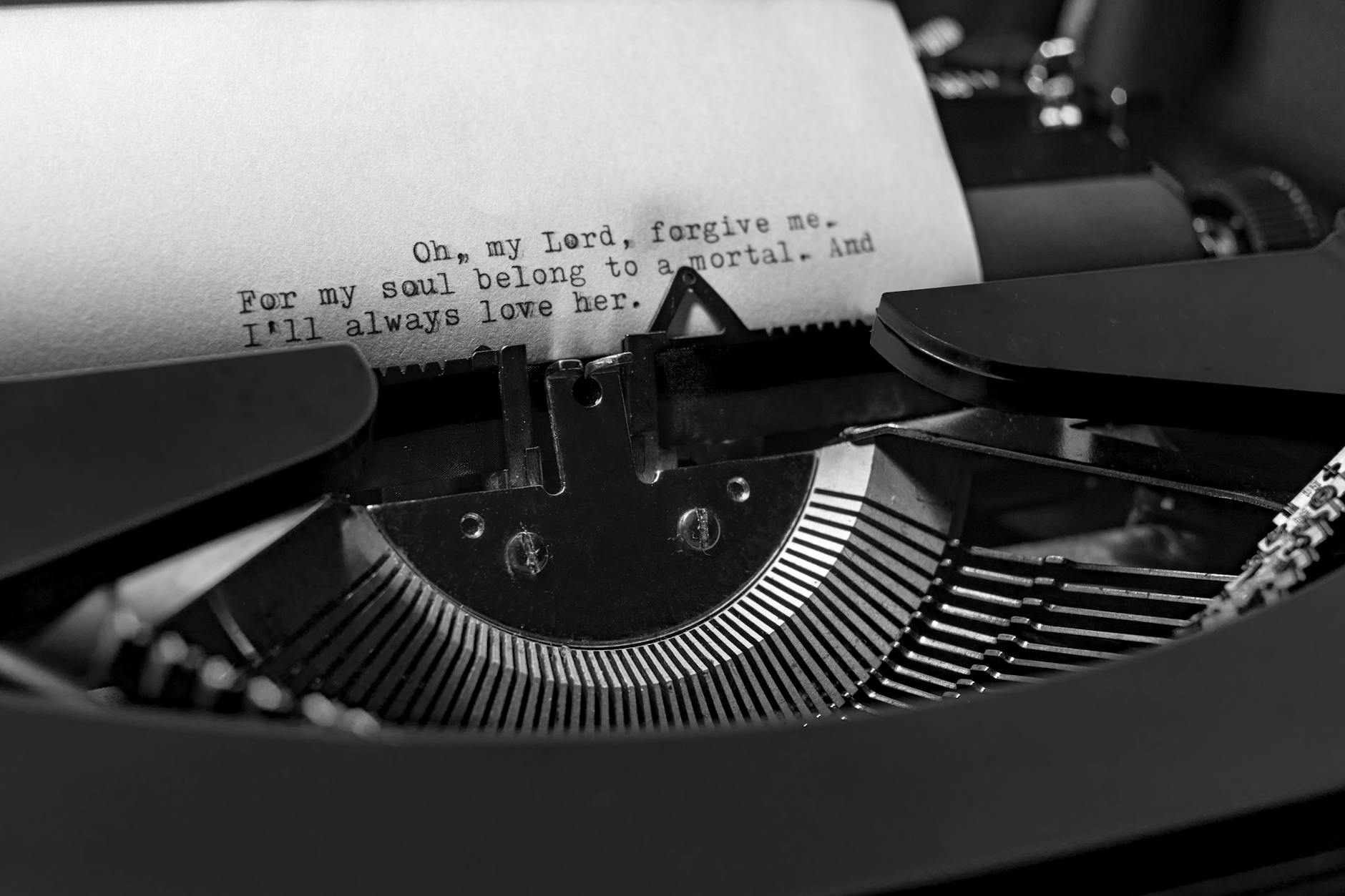
The fastest way to know a writer is a beginner is to read their dialogue. Not because the lines are bad, but because the rhythm gives them away. Real people do not speak in complete sentences on alternating turns like a well-behaved tennis match. Real people interrupt, repeat, forget, contradict, stall, and say “anyway” four times in a row. The craft of dialogue is not making characters sound literary — it's making them sound like humans who happen to be typeset.
The three questions every line has to answer
Before a line of dialogue is allowed to exist on the page, it has to answer three questions, and the reader has to be able to feel the answers without being told. The questions are:
- Who is this person, really? — their voice, their class, their education, their specific tics.
- What do they want in this moment? — not in the book, in this moment. If they want nothing, cut the line.
- What are they refusing to say? — the subtext. The unspoken thing their words are a shape around.
If a line answers all three, it's a line worth keeping. If it answers only the first (character voice without motive or subtext), you've written what craft books call “flavour text” — decorative and dead. Cut it.
Subtext is the only rule that matters
Every writing teacher repeats some version of this. Most beginners nod and then ignore it, because subtext sounds theoretical. In practice, subtext means one thing: characters are almost never saying what they actually mean. They are saying something near what they mean. The reader's job is to triangulate.
If a husband says “You always do this,” he's not making a statement about frequency. He's saying I feel small, again. If a teenager says “Whatever,” she's not disengaging — she's protecting something. Writing dialogue without subtext is writing dialogue without humans in it.
A quick test. Take a conversation you've written, and for every line, write a parenthetical of what the character is really saying:
“I thought you were going to call.” (I waited. I was scared.)
“I was going to.” (I forgot. I'm not sorry enough.)
“It's fine.” (It's not.)
If you can't write the parenthetical, the line has no subtext and doesn't belong.
Rhythm: the thing you have to read aloud to hear
Read your dialogue aloud. Not silently. Aloud. Most clunky dialogue sounds fine when you scan it with your eyes because your eyes are forgiving. Your mouth isn't. When you read a line of bad dialogue aloud, your mouth trips on it — the rhythm is wrong. Maybe there's a clause too many, or a word the character wouldn't use, or the exchange has settled into a drone.
Specific things that usually show up as rhythm problems:
- Too many complete sentences. Real speech is fragments. “I could've been there.” is a complete line. “I could have been there if you had remembered to call me yesterday evening when you said you would.” is a press release.
- Everyone answering every question. In real conversations, people ignore questions all the time. If your character never dodges, they're not a person — they're a chatbot.
- No interruption. Interruption is information. Who interrupts whom is a map of power in the scene.
- Dialogue tags doing all the work. If you need “she said angrily,” the line itself failed. Rewrite the line so the reader feels the anger from the words and the rhythm.
The “third character” trick
When a scene between two people starts to feel like tennis, introduce a third character — even silently. Have the second character be thinking about a third person the whole time. Or put an object in the room that matters more than the conversation. Your dialogue will suddenly acquire texture because both speakers are distracted, the way real people are distracted.
This is why kitchen-table scenes so often outperform two-people-in-a-cafe scenes. The kitchen has dishes, a dog, a window, a running tap. The cafe is empty. Put stuff in the room.
A diagnostic for your own dialogue
Find a page of your own dialogue and ask these five questions of every exchange:
- Could either character's lines be swapped into the other's mouth without loss? If yes, you haven't given them voices.
- What does each character want from the other in this exchange, right now? If you can't answer in one sentence, the scene has no engine.
- Does anyone interrupt, dodge, or refuse to engage? If not, nobody in your scene is behaving like a human.
- Read it aloud. Does your mouth trip anywhere? Mark the trip. Rewrite the line from scratch.
- Remove every “she said angrily / softly / bitterly / thoughtfully.” Does the line still carry the emotion? If not, rewrite the line, not the tag.
The difference between written dialogue and real-seeming dialogue is not talent. It's the five questions above, asked ruthlessly, over and over. Most published dialogue gets rewritten five to ten times. If yours is coming out on the first try and sounding “fine,” it's almost certainly flat.
The quiet thing
The best dialogue in fiction does one more thing than anything above: it leaves silences. White space in the text where you can feel two people thinking but not saying. A character starting a sentence and stopping. An answer that arrives four lines later. The reader's imagination fills those silences, and whatever they fill them with is always sharper than what you could have written. Trust the silence. It's doing more than the lines.


Start the conversation
Thoughtful disagreement welcomed. Promotional links quietly removed.