There's a pass in revision most writers refuse to do. Call it the favorite-line pass. It's the one where the sentence you love most — the hard-won, show-to-your-writing-group sentence, the one you wrote the book around — is offered up for deletion.
Not “kill your darlings” in the Faulkner aphorism sense, which most writers take to mean: trim some show-off prose. I mean something more specific. The favorite line in your novel is almost always the line that has been protecting surrounding pages from scrutiny. It's bodyguard prose. You've been loath to examine the paragraphs around it because if the favorite line is there, surely everything nearby is working.
Reader, it usually isn't.
The thing the favorite line is doing to the book
When you wrote the favorite line, you felt the book click. That click is real — it's the feeling of craft landing. The problem is that the click becomes a landmark in the manuscript. You orient around it. You defend it. You build scenes toward it and away from it. You refuse to restructure chapters that would endanger it.
And so the line becomes a structural constraint. If your scene ordering requires that line to be on page 143, then the scenes before page 143 must exist to bring the protagonist to a state where that line is earned. Some of those scenes were invented for no other reason. They will not survive a structural edit; they are load-bearing only in the geometry of the favorite-line's survival.
Cutting the favorite line is often the one move that frees the manuscript to become whatever it actually wants to be, rather than a gantry for a single sentence.
How to run the pass
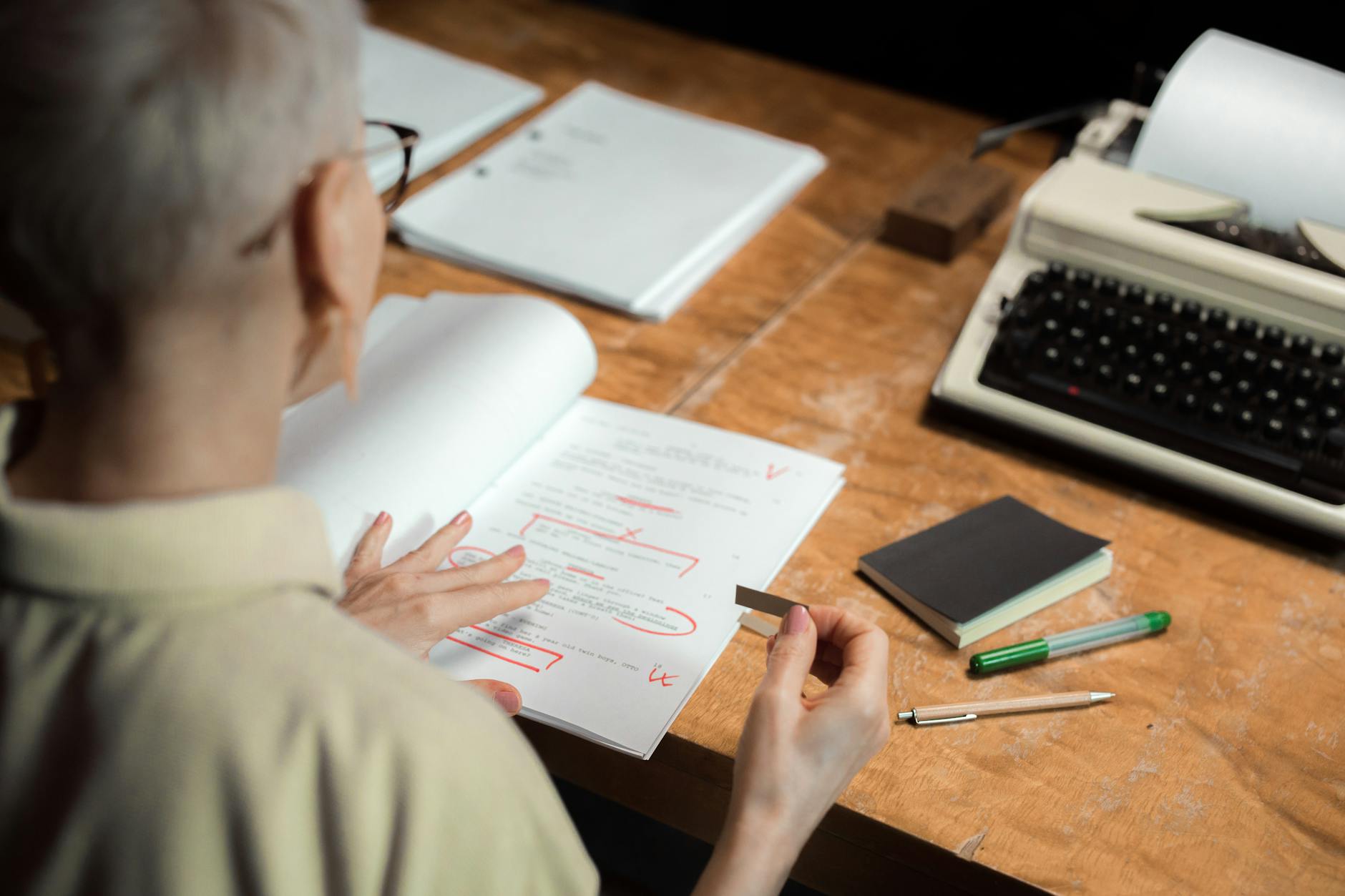
Print the manuscript. Highlight, in yellow, every sentence you're proud of. You'll have fewer than you think — probably twenty to forty in a 90,000-word draft. Good.
Now read the highlighted sentences, one after another, divorced from context. Two questions for each:
1. Does the line still land when stripped of the novel around it? A line that only works as the endpoint of 200 pages of build-up is doing structural work; a line that strikes cold is carrying its own weight.
2. What would the book look like if this line didn't exist? Not “would the book be worse.” Would it be differently shaped? What chapter could you restructure now that the gantry is gone?
The second question is the one that separates editing from revising. Most writers never ask it because it terrifies them. Anywhere the answer is “the book would be noticeably re-shaped,” you have a candidate for cutting — not for aesthetic reasons, but because the line is exerting downward pressure on choices that should be free.
What to actually delete
Not all of them. Be clear about that. You don't torch your best sentences on principle. The pass is a diagnostic, not a bloodletting.
You cut the ones where the honest answer to question 2 is: “the book would finally be able to do X that I've been avoiding.” That X is usually a restructuring you've sensed and resisted. The favorite line was keeping you from it.
You cut the ones where the line now feels less earned than it did when you wrote it — where craft has grown past the sentence, where the surrounding prose has sharpened and the once-dazzling line now looks overwritten. This is a sign of progress. You get to graduate the line.
You cut the ones where you're more loyal to the sentence than to the scene it's in. When the scene needs something the sentence is blocking — a shorter paragraph, a different emphasis, a harder ending — and you won't deliver it because it means losing the sentence, you're writing for the line. Stop.
What happens afterward
This part people don't warn you about. After you cut a favorite line, you'll grieve it. There will be a soreness. You may put it in a separate file, a graveyard document, promising the line it'll have a place in a future book. Do that, genuinely. You may use it again. Some writers do.
And then you'll find, within a week, that the chapter around the former line has quietly reshaped itself. Paragraphs that had existed to support the line are loose now. You cut two of them. The scene gets tighter. The line you write to replace the favorite — because some transition is now needed — is smaller, plainer, and better-fitted. The book is more the book it was trying to be.
This is almost always what happens. Almost always. The exception is manuscripts so polished that every part bears weight and no line is protecting any other; those manuscripts can skip this pass. Most drafts are not that.
A working list
Three favorite-line patterns I've seen repeat. Watch for them in your own draft.
The aphorism. A short, ringing line at the end of a paragraph. “Love is not what you think it is.” These lines are frequently load-bearing in a way that suppresses the specific scene observations that would have been better. The scene works harder when you delete the aphorism and let the physical detail carry the feeling.
The long-period sentence. A cathedral sentence — five commas, rhythm building — that probably took you a morning to make. When it works, it really works. When it's doing bodyguard duty, it's usually padding the start of a chapter that you haven't earned the right to open grandly yet.
The quiet, small line you remember from draft 1. The one that survived every pass. The one you won't look at too closely. Especially look at that one. Your loyalty to it is a signal. The book has moved past draft 1 and this line has not moved with it.
Trust over sentence
The deeper principle: you are a better writer than the writer who wrote your favorite line. You were a better writer a month after you wrote it. You will be a better writer a year after you revised it.
Your allegiance has to be to the book, not the line. The line was a step toward the book. Sometimes it's a step you can stand on; sometimes it's a step you have to kick away so the next one is usable.
Cut it. Watch the chapter reorganise. Feel the ache, then keep working. That's the pass most writers won't do, and it's why most drafts stay almost-good.

Start the conversation
Thoughtful disagreement welcomed. Promotional links quietly removed.