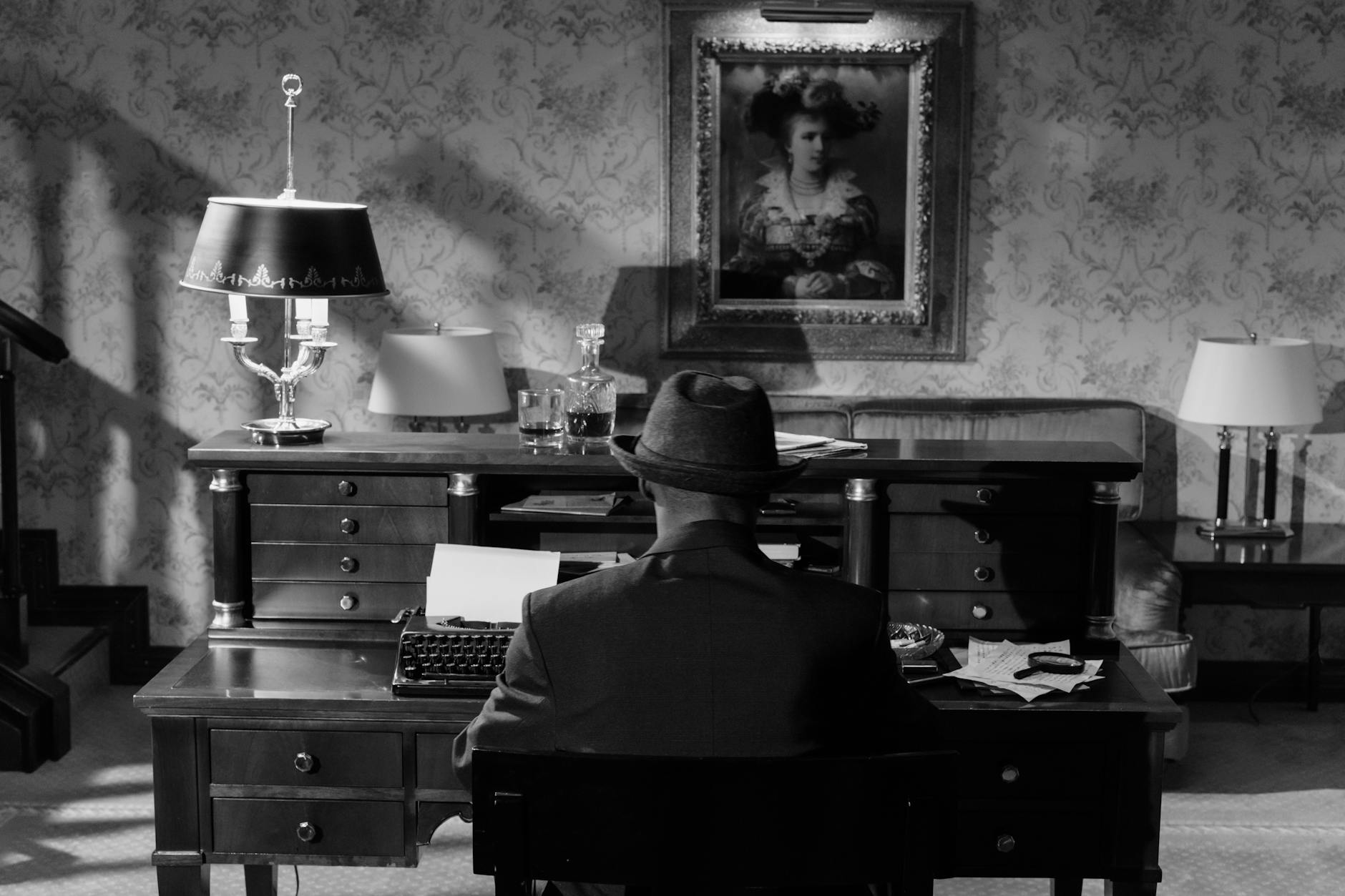
The best-kept secret of literary fiction is that almost every propulsive technique it uses — the chapter-end hook, the withheld piece of information, the unreliable narrator as structural engine, the staged reveal that changes everything backward — was invented or perfected inside genre, often inside crime, and then quietly imported.
Writers of literary fiction are sometimes embarrassed about this. They shouldn't be. It's a tradition. Dickens learned from melodrama, Dostoyevsky from the penny dreadful, Highsmith and Chandler raised the bar for interiority inside plot. The fiction that wins the most prestigious prizes today is shockingly often crime fiction wearing a literary sweater.
I'll lay out what got stolen, where from, and what's still available to steal.
What got stolen #1 — propulsion
The crime novel's first great gift is the engine. A crime has happened, or is about to happen. Until it's solved or it fires, you have to keep turning pages. Chapters end on small unresolved questions. Scenes end on a beat, not a blur. The reader, without being able to name what she's feeling, feels forward motion.
Literary fiction learned this and now uses it routinely. Sally Rooney's chapters end on unresolved micro-disasters. Anne Enright ends hers on a sudden reversal of feeling. The technique — leave the reader with something unresolved at the close of the unit — came out of serialized crime writing in the 19th century. It's not beneath you. It's the minimum.
What got stolen #2 — the withheld truth
The crime novel is structurally about information asymmetry. The writer knows the whole story; the reader is getting it in pieces; the detective and the reader are often (not always) in similar ignorance, catching up together.
Literary fiction grabbed this and calls it “gradual revelation.” A narrator who knows what happened but hasn't told you yet. A family secret that reframes the whole novel when dropped. A first-act fact that turns out to have meant something different all along.
The engine is the same: the reader is reading for the reveal. The novel is still “literary” because the revelation is emotional rather than a murderer's name. But the architecture is crime-novel architecture. Know that, and deploy it honestly.
What got stolen #3 — the structural misdirection
Early-20th-century crime perfected misdirection: make the reader look at the wrong evidence so the right clue is invisible in plain sight. Christie was a master of this.
Modern literary fiction uses this against the reader's understanding of character, not evidence. The novel seems to be about a marriage. It's actually about a sister. The novel seems to be a grief memoir. It's actually a crime. The novel seems to be coming-of-age. It's actually a portrait of the aunt glimpsed in chapter 3.
This is misdirection — deliberate pointing of the reader's attention at what seems central while the real weight sits elsewhere. It's a crime writer's move. Literary fiction is better for using it.
What got stolen #4 — the present-tense intensity
Present-tense close narration — you are in her head, right now, as it happens — scales up from short fiction experiments of the 1970s to the crime thriller's need for immediate pressure. Jennifer Egan, Hilary Mantel, Tana French — they all use it. They all stole it from the same place: the hard-boiled detective chapter that can't afford the meditative gap of past-tense retrospect.
Past tense lets the narrator know what's coming. Present tense makes her equal to the reader — both of them moving forward, neither ahead. It's an intimacy engine, and it came through genre.
What's still available to steal
Three more techniques, all underused in literary fiction.
The clock. A time pressure structuring the whole book. In crime: the body, the deadline, the train. In literary fiction: the deathbed, the reunion, the sentencing, the wedding. A clock gives the novel a shape the reader can feel even if you never name it. Many literary novels have a loose clock; few have a tight one. The tight one is the crime writer's gift.
The red herring as character work. A character you set up as important, who turns out to be less important than another character you disguised as minor. Literary fiction can do this at the level of emotional weight rather than plot function. The reader thinks the book is about the glamorous sister. The book is about the quiet one. The glamorous sister was a red herring for attention.
The detective POV — not literally. Someone in the novel has to be asking the questions you want the reader to ask. In crime fiction this is the detective. In literary fiction it can be a journalist, a child, a new girlfriend, a therapist, a biographer. Someone whose job inside the scene is to ask, “wait, what really happened?” This character asks the questions you can't ask at the narrator level, and the reader rides her.
A novel that lacks a questioner ends up having to stage its revelations as accidents. They feel less earned.
Why this matters beyond the techniques
Literary fiction has a bad habit. It sometimes confuses “literary” with “slow.” Then it confuses “slow” with “deep.” And then it confuses “interior” with “eventless.”
Interior is not eventless. Deep is not slow. The best literary novels of the last thirty years — the ones that cross over commercially without losing any craft cred — are the ones that most openly use genre architecture. They have a clock, a question, a misdirection, a reveal. They do it while rendering a consciousness so precisely that the plot feels like the least of it. But the plot is doing work. The plot is why you read to the end.
If you're writing literary fiction and your manuscript is drifting, the fix is not more introspection. The fix is probably a question, planted on page 1, that the book is going to answer in chapter 12. That's a crime novel's first move. Steal it. The best literary writers always have.



Start the conversation
Thoughtful disagreement welcomed. Promotional links quietly removed.