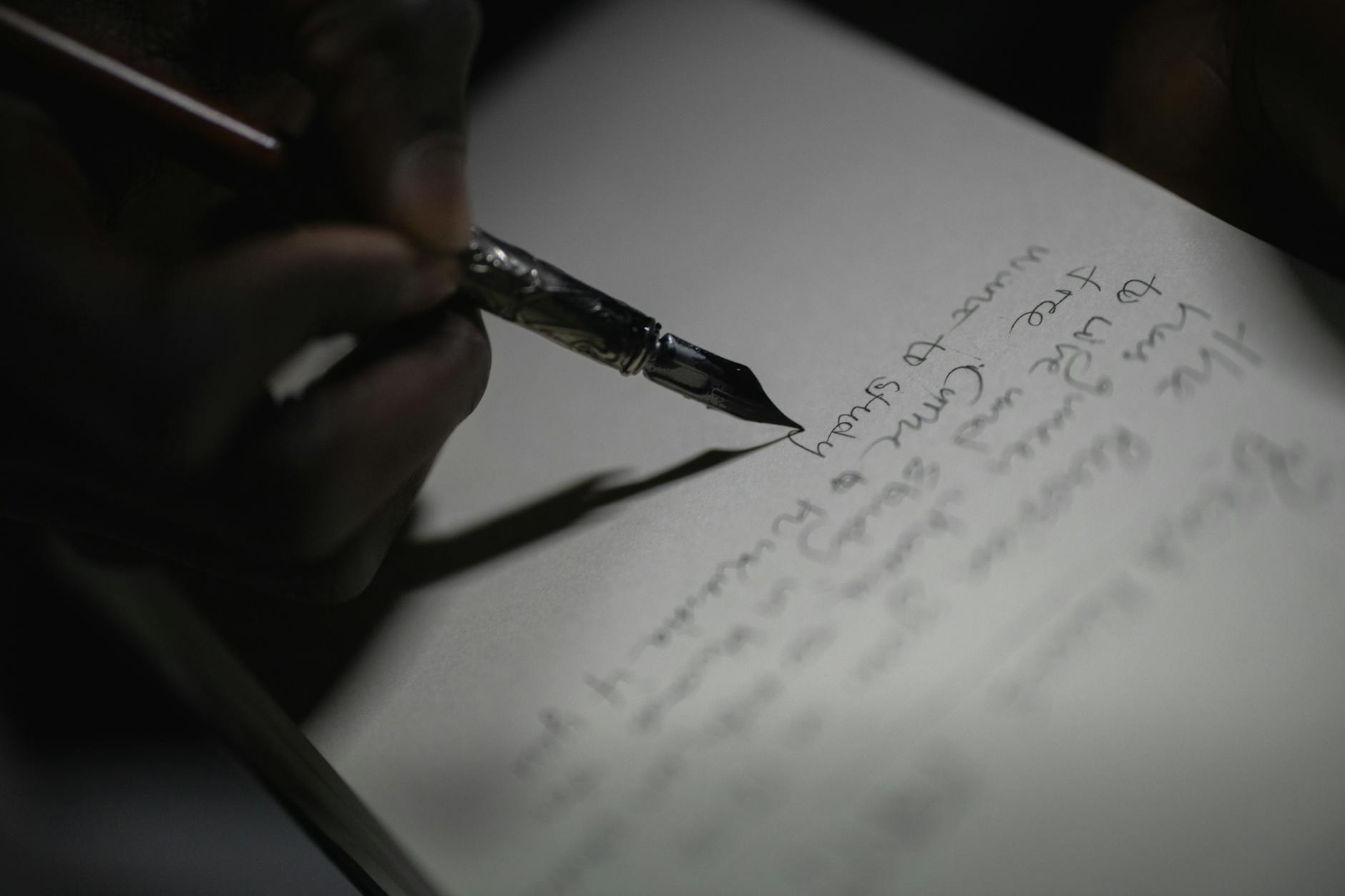
The first sentence of a novel is the only one every reader reads. That should terrify you a little. The next sentence gets maybe 80% of those readers. By the end of the first page, you've lost another third. Ten pages in, the book is either in their hand or back on the shelf — and nothing you wrote after page ten has had any chance to persuade them.
So the opening is weighted with a question the rest of the book doesn't have to answer: why this novel, right now, in this reader's hands? Great opening lines are great because they answer that question on an angle the reader wasn't expecting.
What an opening line is actually doing
Almost every craft book will tell you an opening has to “hook.” This is true but mostly unhelpful — it tells you the job without telling you the tool. What an opening line is really doing, mechanically, is three things at once:
- Setting the terms of the narrator's voice (formal? chatty? ironic? bruised?)
- Deciding what kind of reality the book operates in (is this social, psychological, absurd, magical?)
- Making a promise the rest of the book will keep or deliberately break
All three happen in a single sentence, often in fewer than fifteen words. This is why the opening is the most re-written sentence in any novel. Here are three that have done it across very different genres.
Toni Morrison, Paradise — “They shoot the white girl first.”
Six words. The book is about a massacre at a convent in rural Oklahoma, and Morrison spends the rest of the novel making sure you never learn which woman at the convent is white. The opening doesn't just hook — it creates an unsolvable puzzle that forces you to keep reading for information the book refuses to deliver. The real craft move: every time you turn a page hoping to be told, Morrison is teaching you something about how race is a fiction we participate in. The opening isn't a hook. It's the book's argument, miniaturized.
Italo Calvino, If on a winter's night a traveller — “You are about to begin reading Italo Calvino's new novel.”
Second person, addressed to you. Before the story has started, the narrator has broken the fourth wall and made the reading of the book a character in the book. Calvino has set the terms so decisively in ten words that when the novel later becomes a frame-story about ten different novels, none of it feels like a gimmick — you were told, on line one, that this was a book about reading. The promise was kept. Calvino has set the terms so decisively in ten words that when the novel later becomes a frame-story about ten different novels, none of it feels like a gimmick — you were told, on line one, that this was a book about reading, and how point of view can deceive was a promise that was kept.
Anne Carson, Autobiography of Red — “He came after Homer and before Gertrude Stein, a difficult interval for a poet.”
This is a verse novel about a red monster who falls in love with Herakles, and its opening line sets the tone with a deadpan historical joke that could be an academic footnote. Carson tells you in one sentence that this book takes Greek myth seriously, loves scholarly dry humour, and is going to treat its monster-protagonist like a poet who happens to exist. Three tonal claims staked before the story starts.
The quiet decision these three share
Each of these writers made a decision that most drafts miss: the opening line commits to something that costs the writer later. Morrison commits to never telling you who's white. Calvino commits to never fully finishing any of the ten embedded novels. Carson commits to academic humour inside a lyric form. These are all expensive choices, and the opening line lets the reader feel the cost, which is what creates trust.
If your opening line doesn't commit to anything, it's not earning the first ten pages. It's just decorating them. Ask of your own opening: what, specifically, am I going to have to carry for 300 pages because of this sentence? If there's no good answer, the sentence isn't doing its real job.
A test you can run in five minutes
Take your current opening and write three more, each a commitment to something different:
- An opening that commits to a voice so specific you have to keep it on every page.
- An opening that commits to a question the reader wants answered but the book is going to refuse.
- An opening that commits to a form — second person, epistolary, fragmentary — that you'll have to sustain.
Read all four aloud. The one you're most scared to keep is probably the right one. The one that sounds the most like every other opening is the one you should throw away.
What comes after
An opening line is a contract. The rest of the novel is the invoice. If the opening line promises too little, the reader has no reason to keep reading. If it promises too much and the book doesn't deliver, the reader feels conned. The sweet spot — the one Morrison, Calvino, and Carson all found — is promising one impossible-looking thing and then quietly delivering on exactly that for the whole book.
Rewrite your first sentence like it's the only sentence you'll ever write. Because for a third of your readers, it is.


Start the conversation
Thoughtful disagreement welcomed. Promotional links quietly removed.