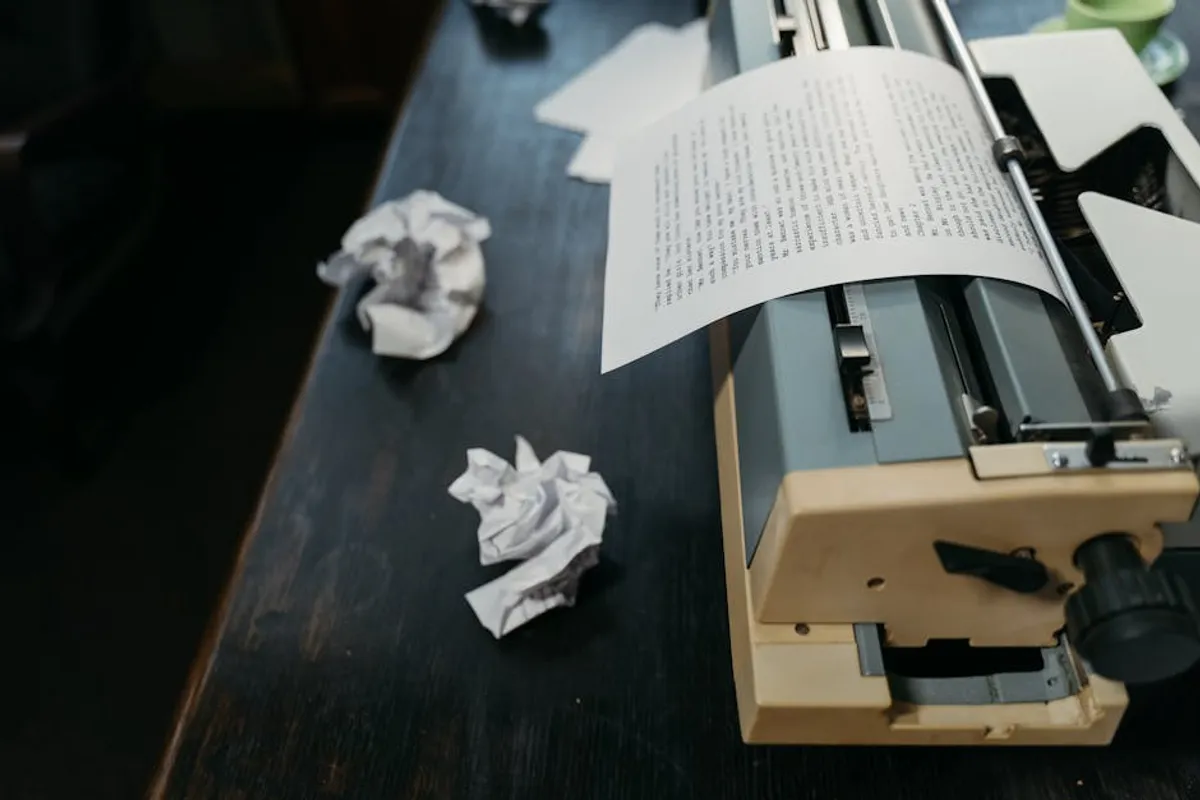
Fiction writing, by its nature, demands a constant wellspring of ideas—characters, plots, settings, and conflicts that resonate with readers. For many writers, however, the blank page or a narrative cul-de-sac can prove a formidable obstacle. Writing prompts serve as strategic catalysts, designed not merely to provide a starting point, but to challenge conventional thinking, introduce unexpected elements, and stimulate new narrative pathways. The utility of a prompt extends beyond initial inspiration; it can be a tool for practicing specific craft elements, exploring unfamiliar genres, or breaking through creative blocks that impede consistent output.
This curated selection focuses on resources and methodologies that offer tangible, actionable prompts for fiction writers in 2026. The aim is to provide a clear understanding of each resource's specific advantages, allowing writers to select tools that align with their individual creative process, genre focus, and desired level of structural guidance.
How to Evaluate Writing Prompts for Fiction
When selecting a writing prompt resource, consider several factors to ensure it aligns with your creative needs and writing goals. First, assess the prompt's specificity: does it offer a clear starting point, or is it too vague to be useful? Prompts should ideally provide enough detail to spark imagination without dictating the entire narrative. Second, evaluate the diversity of the prompts—do they cover a range of genres, character types, and conflict scenarios, or are they limited to a narrow scope? A diverse set of prompts can help expand your writing range. Third, consider the format: do you prefer text-based prompts, visual cues, or interactive tools? The format can significantly impact engagement and usability. Finally, think about the prompt's potential for expansion. The most effective prompts are those that can be reinterpreted, combined with other ideas, or used as a springboard for multiple stories, offering long-term value beyond a single writing session.
1. The Story Engine Deck
The Story Engine Deck offers a tactile, card-based system designed to generate complex narrative seeds. Each card features elements like character archetypes, settings, objects, and conflicts, which writers combine to construct unique scenarios. This resource prioritizes structured randomness, moving beyond simple one-line prompts to facilitate intricate plot development and character interaction. Its strength lies in providing diverse components that can be reassembled endlessly, fostering creative connections that might not emerge from traditional text-based prompts.
Best for: Writers seeking a physical, modular tool for generating detailed plot concepts and overcoming structural narrative blocks. Ideal for those who prefer hands-on interaction over digital interfaces.
Pros:
- Physical, tangible cards encourage offline brainstorming and reduce digital distractions.
- Modular system allows for millions of unique prompt combinations, ensuring long-term utility.
- Focuses on core narrative elements (character, setting, conflict), providing a solid foundation for story development.
- Can be used for various genres and story lengths, from short stories to novel outlines.
Cons:
- Initial investment cost is higher than free online prompt generators.
- Requires a degree of interpretation and synthesis from the writer to form a coherent narrative.
- Portability is limited compared to digital alternatives.
Verdict: A valuable investment for serious fiction writers who benefit from structured, physical brainstorming and require a consistent source of detailed narrative starting points. Its combinatorial nature ensures fresh ideas for years.
2. Reedsy Prompts
Reedsy's prompt generator provides a daily stream of concise, text-based prompts, often featuring a specific genre, character, or situation. These prompts are curated and frequently tied to ongoing writing contests or community challenges, adding an external motivation element. The platform emphasizes brevity, delivering prompts that are direct and immediately actionable, suitable for short story exercises or quick warm-up sessions. Its strength lies in its consistency and the community aspect, which can foster engagement and provide deadlines for writers.
Best for: Writers seeking consistent, short, and actionable daily prompts, especially those motivated by community interaction or contest opportunities.
Pros:
- Daily new prompts ensure a continuous source of inspiration.
- Prompts are often concise and genre-specific, making them easy to interpret.
- Integration with writing contests and community features can provide external motivation.
- Free to access, offering high value without financial commitment.
Cons:
- Prompts can sometimes be generic, requiring significant writer input to develop originality.
- Lacks advanced filtering or customization options for prompt generation.
- Primarily text-based, offering less visual or interactive stimulation.
Verdict: An excellent free resource for daily writing practice and quick idea generation, particularly for writers who thrive on regular, structured challenges and community engagement.
3. Writer's Digest Prompt Library
The Writer's Digest Prompt Library aggregates a vast collection of text-based prompts, categorized by theme, genre, or specific writing challenges. This resource benefits from decades of editorial expertise, offering prompts that often focus on specific craft elements such as character development, dialogue, or setting description. Its depth and organization allow writers to target particular areas for practice or to explore a broad range of narrative possibilities, making it a comprehensive digital archive for inspiration.
Best for: Writers looking for an extensive, categorized library of text prompts to explore specific craft elements or broad narrative themes.
Pros:
- Extensive archive ensures a wide variety of prompts for different needs.
- Categorization aids in targeted practice, such as focusing on dialogue or character.
- Backed by a reputable publishing resource, often reflecting professional writing advice.
- Accessible online, providing flexibility for writers on various devices.
Cons:
- Interface can be less dynamic than interactive generators.
- Prompts are static, requiring manual browsing rather than algorithmic generation.
- Some prompts may feel dated compared to contemporary trends.
Verdict: A reliable and deep resource for writers who appreciate a curated, organized collection of prompts, especially useful for targeted skill development and exploring established narrative structures.
4. Reddit's r/WritingPrompts
The r/WritingPrompts subreddit is a community-driven platform where users submit and respond to a constant stream of new prompts. This resource thrives on its sheer volume and the diversity of its user base, resulting in prompts that range from the whimsical to the deeply philosophical, often reflecting current cultural trends or niche interests. The interactive nature of the subreddit, where writers can read and comment on others' responses, provides an additional layer of engagement and immediate feedback, fostering a dynamic creative environment.
Best for: Writers seeking a high volume of diverse, community-generated prompts and who thrive on immediate feedback and interaction within a large creative network.
Pros:
- Extremely high volume of new prompts posted daily by a global community.
- Diverse range of themes, genres, and levels of specificity.
- Opportunity to read and engage with other writers' interpretations of prompts.
- Completely free and accessible to anyone with a Reddit account.
Cons:
- Quality control varies; some prompts may be less inspiring or well-conceived.
- Can be overwhelming due to the sheer quantity of content.
- Feedback quality is inconsistent and dependent on individual users.
Verdict: An unparalleled source for raw, unfiltered inspiration and community engagement, ideal for writers who enjoy rapid-fire idea generation and don't mind sifting through content for gems.
5. Rory's Story Cubes
Rory's Story Cubes are a set of nine dice, each featuring six unique images or symbols. Writers roll the cubes and then construct a narrative that incorporates all nine visual elements. This system bypasses text entirely, encouraging visual thinking and lateral connections between disparate concepts. The simplicity of the mechanics belies a powerful ability to generate unexpected plot twists and character motivations, making it particularly effective for breaking habitual thought patterns and fostering imaginative leaps.
Best for: Writers who benefit from visual stimuli and tactile interaction to spark imagination, especially useful for developing non-linear plots or surreal elements.
Pros:
- Tactile and visual nature stimulates different parts of the brain than text prompts.
- Encourages creative interpretation and connection of seemingly unrelated elements.
- Highly portable and usable anywhere without technology.
- Simple rules make it accessible for all ages and experience levels.
Cons:
- Limited number of unique images compared to digital or card-based systems.
- May require additional expansion packs for long-term variety, incurring extra cost.
- Some writers may find the abstract nature of the images too vague for direct plot generation.
Verdict: An excellent tool for visual thinkers and those seeking a playful, tactile method to generate story ideas, particularly effective for overcoming creative ruts and fostering imaginative connections.
6. The 3 A.M. Epiphany (book)
This collection of writing prompts, presented in book format, moves beyond simple "what if" scenarios to focus on specific aspects of craft. Author Brian Kiteley curates prompts designed to challenge writers to experiment with form, voice, point of view, and thematic depth. The prompts are often multi-layered, encouraging deep exploration rather than superficial engagement. Its value lies in its pedagogical approach, guiding writers to think critically about their narrative choices and push the boundaries of their storytelling abilities.
Best for: Serious fiction writers looking to deepen their understanding of craft, experiment with narrative techniques, and engage with prompts that demand critical thinking and sustained effort.
Pros:
- Prompts are designed to improve specific writing craft elements, not just generate ideas.
- Encourages experimentation with form, voice, and narrative structure.
- Offers a structured, progressive approach to creative development.
- Physical book format allows for annotation and focused study without digital distractions.
Cons:
- Requires a purchase, unlike many free online resources.
- Prompts are not randomly generated, so variety is finite within the book.
- May be too advanced or demanding for beginners seeking simple starting points.
Verdict: An invaluable resource for dedicated fiction writers committed to honing their craft. It functions more as a writing workshop in a book than a simple prompt generator, delivering prompts with significant depth and instructional value.
7. Plot Generator (online tool)
Various online plot generators leverage algorithms to combine pre-defined narrative elements—such as characters, settings, inciting incidents, and resolutions—into a cohesive, albeit often formulaic, plot summary. These tools are designed for rapid idea generation, providing a scaffold that writers can then flesh out with their unique voice and details. While they may not produce highly original concepts, their strength lies in quickly providing a basic narrative structure, which can be particularly useful for outlining or for overcoming initial plot paralysis.
Best for: Writers who struggle with initial plot construction or need a quick, structured outline for a story, particularly useful for genre fiction with established tropes.
Pros:
- Generates complete, albeit basic, plot summaries quickly.
- Can combine diverse elements in unexpected ways, sparking new ideas.
- Useful for outlining and establishing a foundational narrative arc.
- Free and easily accessible online, requiring no special software.
Cons:
- Generated plots can be generic or cliché, requiring significant revision.
- Lacks nuance in character development or thematic depth.
- Reliance on pre-programmed elements limits true originality.
Verdict: A practical tool for overcoming plot blocks and generating foundational narrative structures, especially for writers who need a quick starting point to build upon rather than a fully developed concept.
8. Pinterest Visual Prompts
Pinterest serves as an expansive visual database where writers can find and curate image-based prompts. Boards dedicated to "writing prompts," "story ideas," or specific aesthetic themes offer a rich source of inspiration. The strength of Pinterest lies in its visual nature, allowing writers to immerse themselves in specific moods, settings, or character aesthetics. By browsing curated collections or creating their own, writers can discover images that evoke narratives, bypassing the limitations of text-only prompts and engaging a different creative faculty.
Best for: Highly visual writers who draw inspiration from images, aesthetics, and mood boards to develop settings, characters, or atmospheric details for their fiction.
Pros:
- Provides a vast, diverse source of visual inspiration, from photographs to illustrations.
- Allows for highly specific searches based on keywords, aesthetics, or themes.
- Writers can curate their own boards, creating personalized prompt collections.
- Engages visual creativity, often leading to unique narrative directions.
Cons:
- Requires active searching and curation; prompts are not delivered automatically.
- Visual prompts demand more interpretation from the writer to translate into narrative.
- Can be a source of distraction if not used with focused intent.
Verdict: An excellent, free resource for visually-oriented writers seeking to develop rich settings, evocative characters, or distinct atmospheric tones. It functions as a powerful digital mood board for story genesis.
9. NaNoWriMo Resources
National Novel Writing Month (NaNoWriMo) provides a suite of resources, including prompt lists, brainstorming exercises, and thematic challenges, primarily geared towards novel-length projects. While seasonal, many of these resources are archived and accessible year-round. Their prompts often focus on sustained narrative development, character arcs, and world-building, reflecting the demands of writing a full novel within a month. The community aspect and emphasis on consistent output make these prompts particularly useful for long-form fiction writers. The community aspect and emphasis on consistent output for long-form fiction make these prompts particularly useful for writers tackling ambitious projects.
Best for: Novelists and long-form fiction writers seeking prompts that encourage sustained writing, character development, and world-building, often with a focus on meeting ambitious word count goals.
Pros:
- Prompts are often geared towards long-form fiction, encouraging deep narrative dives.
- Integrated with a supportive community and a culture of consistent writing.
- Includes brainstorming guides and structured approaches to story development.
- Many resources are freely accessible, providing significant value for aspiring novelists.
Cons:
- Some resources are seasonal or event-specific, though archives exist.
- Prompts may be too broad for writers seeking very specific, short-form ideas.
- The emphasis on speed can sometimes overshadow craft development.
Verdict: An invaluable resource for aspiring novelists, providing prompts and frameworks that support the demanding process of writing a novel, fostering both inspiration and discipline.
10. Duotrope's Prompt Generator
Duotrope, primarily known as a submission tracker for speculative fiction, also offers a prompt generator. This tool leans heavily into genre-specific elements, often providing prompts with a strong speculative, fantasy, or science fiction bent. Its strength lies in its ability to generate prompts that align with the tropes and conventions of these genres, offering targeted inspiration for writers working within these fields. The prompts are typically text-based and can be regenerated for endless variations, making it a niche but effective tool.
Best for: Writers specializing in speculative fiction, fantasy, science fiction, or horror who require genre-aligned prompts to spark ideas within their chosen field.
Pros:
- Generates prompts specifically tailored to speculative fiction genres.
- Offers a continuous supply of new ideas through regeneration.
- Can help writers explore subgenres and specific tropes within speculative fiction.
- Integrated into a platform widely used by speculative fiction writers.
Cons:
- Access requires a Duotrope subscription, incurring a cost.
- Prompts are less useful for writers outside of speculative fiction genres.
- The generator's output can sometimes be formulaic within its genre constraints.
Verdict: A highly specialized tool for speculative fiction writers, offering targeted and consistent inspiration within their chosen genres. The subscription cost is justified for those who utilize Duotrope's other services.
11. Creative Writing Prompts (book series/websites)
Numerous books and dedicated websites offer broad collections of "creative writing prompts," often categorized by theme, emotion, or narrative challenge. These resources typically provide a diverse range of text-based prompts, from




Start the conversation
Thoughtful disagreement welcomed. Promotional links quietly removed.