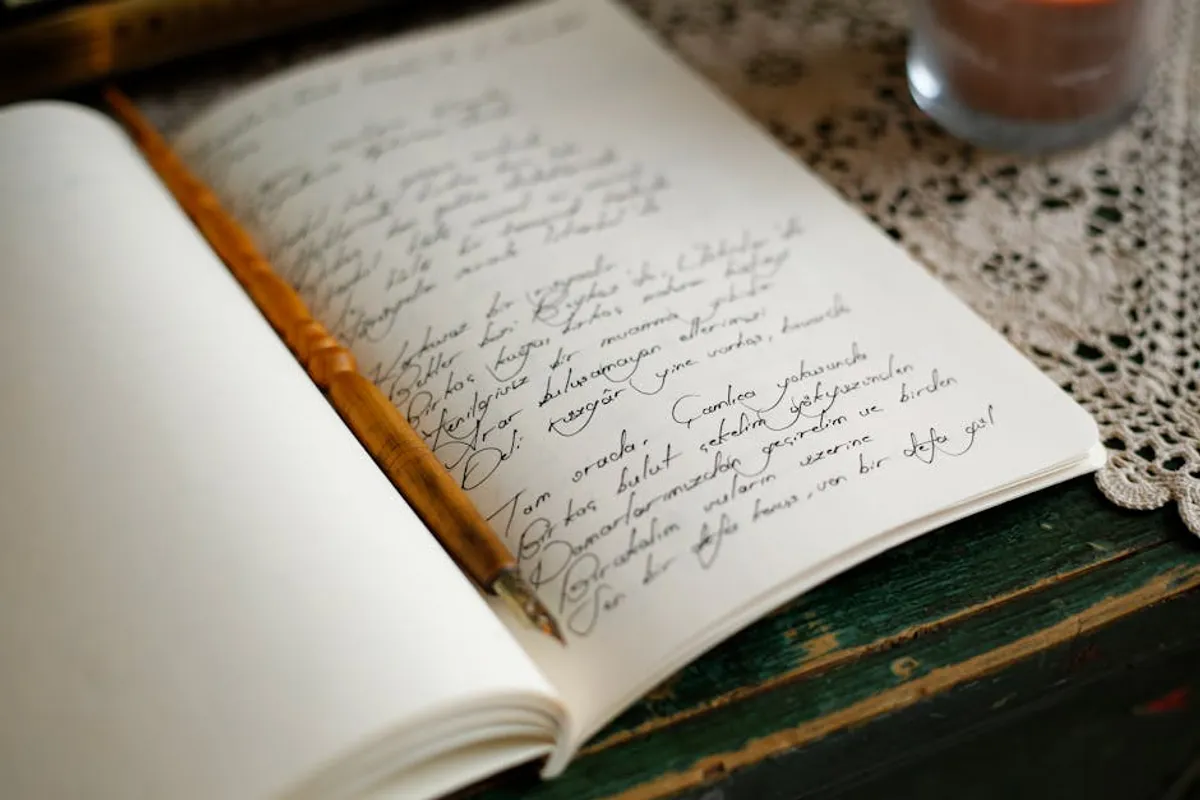
For writers seeking to cultivate a distinctive voice, sharpen their descriptive abilities, and generate fresh ideas, poetry journaling offers a structured yet expansive practice. This isn't merely about recording daily thoughts; it's a deliberate engagement with language, imagery, and emotion designed to feed into more formal writing outputs. The right exercises can transform a blank page into a fertile ground for linguistic experimentation, leading to breakthroughs in prose, marketing copy, or even technical documentation by enhancing precision and evocative power. Understanding which exercises align with specific creative or commercial objectives is crucial for maximizing their impact and ensuring the time invested yields tangible improvements in written communication.
How to Select the Right Poetry Journaling Exercises
Choosing effective poetry journaling exercises involves aligning the practice with your specific writing goals and current creative challenges. Consider whether your primary aim is to overcome writer's block, develop a more vivid descriptive style, explore new thematic territory, or refine your emotional resonance. Look for exercises that push you beyond habitual thought patterns, encouraging new connections between seemingly disparate ideas. Evaluate the time commitment required for each exercise and whether it fits into your existing routine, as consistency is key to sustained development. Prioritize methods that encourage active engagement with language, such as focused sensory observation, metaphor generation, or structural experimentation, rather than passive reflection. The most impactful exercises provide a framework for exploration while leaving ample room for individual interpretation and discovery.
1. The Sensory Inventory
This exercise involves dedicating a journaling session to meticulously cataloging sensory details from a specific environment or memory. The goal is not to interpret or analyze, but to record raw observations across all five senses: sight, sound, smell, taste, and touch. For instance, if focusing on a coffee shop, note the exact shade of the espresso, the hiss of the milk steamer, the aroma of roasted beans, the bitterness of a sip, and the warmth of the ceramic mug. This practice forces a heightened awareness of the immediate world, bypassing abstract thought in favor of concrete, tangible data. The output is a rich, unedited collection of sensory fragments.
Best for: Writers struggling with generic descriptions, those needing to build a robust internal library of vivid imagery, or anyone aiming to ground their writing in specific, evocative detail.
Pros:
- Enhances observational skills, leading to more precise and original descriptive language.
- Generates a vast pool of raw material that can be directly integrated into poems, prose, or marketing narratives.
- Bypasses intellectualization, encouraging a more direct, intuitive engagement with language.
- Reduces reliance on clichés by forcing attention to unique, first-hand experience.
Cons:
- Can feel repetitive if not varied with different subjects or environments.
- May initially produce disconnected fragments rather than coherent narrative, requiring additional work for integration.
- Requires a sustained focus that some writers might find challenging in noisy environments.
Verdict: An indispensable foundational exercise for developing sensory acuity, crucial for any writer aiming to create immersive and believable textual experiences. Its value lies in training the eye and ear to perceive the world with greater specificity.
2. Metaphor Mining
Metaphor Mining focuses on deliberately searching for unexpected comparisons between two seemingly unrelated objects, concepts, or experiences. Begin with a single concrete noun (e.g., "rain") and then list as many abstract or unrelated nouns as possible (e.g., "rain is a whisper," "rain is a forgotten promise," "rain is a broken clock"). The exercise encourages lateral thinking, pushing beyond obvious similarities to unearth surprising connections. This process trains the mind to perceive the world through a lens of symbolic association, which is fundamental to poetic expression and impactful rhetorical devices in commercial copy.
Best for: Writers seeking to enrich their figurative language, develop more original comparisons, or infuse their work with deeper layers of meaning and emotional resonance.
Pros:
- Directly cultivates the ability to generate fresh, non-clichéd metaphors and similes.
- Expands creative thinking by forcing connections between disparate ideas.
- Enhances the emotional impact and memorability of written content.
- Provides a structured approach to overcoming mental blocks when seeking vivid imagery.
Cons:
- Initial attempts may yield strained or illogical comparisons until the skill is developed.
- Requires a willingness to experiment and embrace unconventional associations.
- Can be time-consuming to generate truly impactful metaphors consistently.
Verdict: A powerful exercise for cultivating imaginative leaps and enriching language. Consistent practice with Metaphor Mining directly translates into more compelling and memorable writing, elevating both poetic and persuasive texts.
3. Persona Play
Persona Play involves writing from the perspective of a character that is distinctly not yourself. This could be an inanimate object, an animal, a historical figure, or a fictional being. The goal is to inhabit their voice, emotions, and worldview completely. For example, journaling as an old oak tree might involve describing the passage of seasons from its rooted perspective, or journaling as a lost astronaut could explore themes of isolation and cosmic scale. This exercise develops empathy, expands narrative range, and helps writers discover new linguistic registers and tonal variations.
Best for: Writers aiming to develop strong character voices, explore diverse perspectives, or break free from their own habitual writing patterns and biases.
Pros:
- Strengthens the ability to craft distinct and believable character voices.
- Fosters empathy and understanding of different viewpoints, useful for audience segmentation.
- Unlocks new thematic possibilities and narrative angles.
- Provides a low-stakes environment for experimenting with tone and style.
Cons:
- Can feel inauthentic or forced until the writer fully commits to the persona.
- Requires a significant imaginative leap and sustained focus to maintain the character's voice.
- May inadvertently lead to superficial portrayals if research or deep imaginative engagement is lacking.
Verdict: An excellent method for expanding a writer's emotional and linguistic range. By stepping into other shoes, writers gain insights into diverse experiences, which can inform everything from character development to targeted messaging.
4. Found Poetry Collage
Found Poetry Collage involves taking existing text—from newspapers, magazines, product labels, academic papers, or even previous journal entries—and rearranging, selecting, and omitting words and phrases to create a new poem. The exercise emphasizes the inherent musicality and meaning within existing language, forcing the writer to see words as malleable units rather than fixed elements. This process often uncovers unexpected juxtapositions and allows for the creation of new narratives or emotional landscapes from pre-existing linguistic fragments.
Best for: Writers experiencing writer's block, those who feel overwhelmed by a blank page, or anyone looking to deconstruct and reconstruct language in innovative ways.
Pros:
- Bypasses the pressure of generating original content from scratch.
- Develops an ear for rhythm, cadence, and impactful word choice.
- Encourages playful experimentation with language and form.
- Reveals hidden meanings and poetic potential in everyday texts.
Cons:
- Can feel derivative if not approached with a clear artistic intention.
- Requires a source text, which might limit spontaneous journaling.
- The resulting "poem" might lack a cohesive authorial voice if not carefully curated.
Verdict: A highly effective exercise for rekindling creative momentum and sharpening linguistic awareness. It demonstrates that poetry resides not just in creation, but also in the thoughtful curation and arrangement of existing words.
5. The "What If" Prompt
This exercise begins with a simple "What if..." question, often one that introduces a fantastical, impossible, or highly improbable scenario. Examples include "What if gravity suddenly reversed for an hour?" or "What if animals could speak only in haikus?" The journaling then explores the ramifications of this scenario, focusing on sensory details, emotional responses, and the logical (or illogical) consequences. This pushes the boundaries of imagination, forcing the writer to consider alternative realities and develop creative problem-solving skills within a narrative context.
Best for: Writers seeking to ignite their imagination, generate novel plot points, or develop speculative and surreal elements in their work.
Pros:
- Directly stimulates imaginative thinking and scenario planning.
- Excellent for breaking out of conventional narrative structures.
- Can lead to entirely new story ideas or thematic explorations.
- Encourages detailed world-building, even in short bursts.
Cons:
- May produce ideas that are too outlandish or difficult to develop further into coherent narratives.
- Requires a willingness to suspend disbelief and embrace the absurd.
- Can sometimes lead to superficial exploration if the "what if" is not deeply engaged with.
Verdict: A powerful tool for unlocking imaginative potential and generating unique concepts. Its strength lies in its ability to quickly transport the writer to new creative territories, fostering innovative thought processes.
6. Object Biography
Object Biography involves selecting an ordinary object—a worn shoe, a forgotten key, a chipped mug—and writing its life story from its own perspective. This includes its origins, its experiences, the people it has encountered, and its eventual fate. The exercise demands imaginative empathy and close observation, as the writer must infer a history and personality for an inanimate item. It encourages anthropomorphism and the projection of human emotions and narratives onto the non-human world, a common poetic device.
Best for: Writers looking to develop narrative voice, explore themes of history and memory, or practice imbuing inanimate objects with symbolic significance.
Pros:
- Develops imaginative empathy and the ability to project meaning onto objects.
- Excellent for practicing narrative structure and character development, even on a small scale.
- Encourages close observation of everyday items, revealing their hidden stories.
- Can lead to unexpected insights about human interaction and the passage of time.
Cons:
- Can feel artificial if the writer struggles to genuinely connect with the object.
- May result in overly sentimental or cliché narratives if not approached with originality.
- Requires a sustained imaginative effort to maintain the object's perspective.
Verdict: A valuable exercise for cultivating narrative imagination and the ability to find profound meaning in the mundane. It sharpens the skill of infusing objects with symbolic weight, enhancing descriptive depth.
7. Color Association
Color Association prompts the writer to focus on a single color (e.g., "blue") and free-associate with it. List everything that comes to mind—objects, emotions, memories, sounds, tastes, abstract concepts—that the color evokes. The goal is to explore the full spectrum of its symbolic and sensory associations without judgment or self-censorship. This exercise taps into the subconscious, revealing personal and cultural connections to color, and helps build a rich lexicon of imagery tied to specific hues.
Best for: Writers seeking to deepen their symbolic language, explore emotional palettes, or generate vivid imagery based on abstract concepts.
Pros:
- Unlocks a wide range of sensory and emotional associations tied to a single concept.
- Excellent for generating unique metaphors and similes based on color.
- Helps writers understand the psychological and cultural impact of specific hues.
- Can be a powerful tool for developing cohesive thematic imagery within a longer work.
Cons:
- Can become repetitive if the same colors are frequently chosen.
- May yield superficial associations if not approached with genuine introspection.
- Requires conscious effort to move beyond obvious connections to more nuanced ones.
Verdict: A straightforward yet potent exercise for expanding symbolic vocabulary and understanding the nuanced power of color in evoking emotion and imagery. It’s particularly useful for writers who want to add depth to their descriptive passages.
8. The List Poem
The List Poem exercise involves creating a poem where each line begins with a repeated phrase or follows a consistent structural pattern, essentially building a list. For example, "I remember..." followed by a memory on each line, or "The sound of..." followed by a specific auditory detail. This form provides a clear framework that reduces the pressure of traditional poetic structure, allowing the writer to focus purely on content, imagery, and the cumulative effect of repetition. It can be used to explore a single theme from multiple angles or to accumulate disparate observations into a cohesive whole.
Best for: Writers struggling with poetic form, those needing a structured approach to free verse, or anyone looking to explore a theme through cumulative detail.
Pros:
- Offers a simple, accessible poetic structure that reduces intimidation.
- Excellent for generating a large volume of related ideas and images quickly.
- The repetitive structure can create a meditative, rhythmic quality.
- Allows for deep exploration of a single theme or concept from various perspectives.
Cons:
- Can become monotonous if the repeated phrase or pattern isn't varied or broken.
- May lead to superficial listing rather than profound insight if not carefully guided.
- The simplicity of the form can sometimes mask a lack of deeper thematic development.
Verdict: A highly effective entry point into poetic expression and a valuable tool for generating content. Its structured simplicity allows writers to focus on the richness of their ideas and observations without getting bogged down in complex forms.
9. Dream Recall and Interpretation
This exercise involves immediately journaling upon waking to capture fragments of dreams, images, feelings, and narratives before they fade. The second part of the exercise is to then interpret these fragments, not necessarily for psychological insight, but for their poetic potential. What metaphors are hidden in the dream logic? What emotions are amplified? What unexpected juxtapositions occur? This taps into the subconscious mind, a rich source of surreal imagery and unconventional connections, bypassing conscious censorship.
Best for: Writers seeking to explore surrealism, tap into subconscious imagery, or find unique narrative structures and emotional landscapes.
Pros:
- Accesses a unique, unfiltered source of imagery and narrative from the subconscious.
- Excellent for generating surreal, unexpected, and highly personal content.
- Develops the ability to find meaning and structure in fragmented information.
- Can lead to breakthroughs in understanding personal symbolism and emotional triggers.
Cons:
- Dreams are often fleeting and difficult to recall with precision.
- Interpretation can be subjective and may lead to forced connections.
- Requires consistency in immediate journaling upon waking.
Verdict: A profound exercise for tapping into the wellspring of subconscious creativity. While challenging, its rewards lie in uncovering deeply personal and often startlingly original material that can elevate any form of writing.
10. Dialogue in Verse
Dialogue in Verse involves crafting a conversation between two or more imagined speakers, but rendering their exchange in poetic form rather than conventional prose. This could mean using specific meters, rhyming schemes, or simply focusing on heightened language, imagery, and emotional subtext within the dialogue. The challenge is to maintain distinct voices and advance a narrative or emotional arc through compressed, evocative language. It forces attention to the rhythm and musicality of speech, even when translated into verse.
Best for: Writers developing character voices, honing their ability to convey emotion through dialogue, or experimenting with dramatic poetic forms.
Pros:
- Sharpens the ability to create distinct and believable character voices through poetic language.
- Enhances understanding of rhythm, cadence, and subtext in spoken exchanges.
- Excellent for exploring conflict, intimacy, and complex emotions in a concise format.
- Provides a structured way to practice dramatic writing within a poetic framework.
Cons:
- Can be challenging to maintain natural-sounding dialogue while adhering to poetic constraints.
- May feel artificial if the poetic elements overshadow the authenticity of the conversation.
- Requires a strong grasp of character and narrative intent to be effective.
Verdict: A sophisticated exercise that bridges dramatic and poetic writing. It's invaluable for writers who want to infuse their dialogue with greater depth, musicality, and emotional resonance, making every spoken word count.
11. The Ekphrastic Response
Ekphrastic Response involves writing a poem or poetic prose in response to a piece of visual art—a painting, sculpture, photograph, or even an architectural detail. The goal is not merely to describe the artwork, but to interpret its emotional impact, narrative implications, or symbolic meaning through language. This exercise trains the writer to translate visual stimuli into verbal expression, fostering interdisciplinary thinking and a deeper engagement with artistic interpretation. It pushes beyond surface observation to explore the underlying essence of an image.
Best for: Writers seeking to translate visual information into compelling text, develop descriptive precision, or explore the intersection of different art forms.
Pros:
- Develops the ability to translate visual experiences into evocative language.
- Encourages deep observation and interpretation of artistic works.
- Can lead to unexpected insights into the relationship between different sensory inputs.
- Provides a clear external prompt, reducing the pressure of internal idea generation.
Cons:
- Requires access to visual art, which may not always be readily available or inspiring.
- Can lead to purely descriptive writing if the writer doesn't move beyond surface-level observation.
- The interpretation may be heavily influenced by the writer's existing biases or knowledge of the artwork.
Verdict: An excellent exercise for bridging the gap between visual and verbal artistry. It sharpens descriptive skills and deepens a writer's capacity to interpret and articulate the profound impact of imagery.
12. Constraint-Based Writing
Constraint-Based Writing involves imposing specific, often arbitrary, rules on the journaling process. This could be writing a poem using only words that start with 'S,' composing a piece where every sentence has exactly seven words, or crafting a narrative without using the letter 'E.' The purpose of these constraints is not to create a perfect final product, but to force the writer to think creatively within limitations, bypassing habitual language patterns and discovering new linguistic pathways. The artificial difficulty often sparks unexpected solutions and linguistic playfulness.
Best for: Writers combating writer's block, those seeking to break free from predictable phrasing, or anyone looking to inject playfulness and innovation into their writing process.
Pros:
- Forces creative problem-solving and innovative use of language within boundaries.
- Excellent for breaking habitual writing patterns and clichés.
- Can generate surprising and original linguistic constructions.
- Reduces the pressure of producing "good" writing by focusing on the challenge itself.
Cons:
- Can be frustrating if the constraint is too restrictive or the writer is not in a playful mood.
- The resulting text may be more of an exercise than a publishable piece.
- Requires a willingness to experiment and embrace linguistic challenges.
Verdict: A highly effective method for stimulating linguistic creativity and overcoming mental blocks. By embracing artificial limitations, writers often discover new freedoms and possibilities within language, enhancing their versatility.
Integrating and Sustaining Your Poetry Journaling Practice
To maximize the commercial and creative benefits of poetry journaling, integrate it consistently into your writing routine. Treat these exercises not as isolated creative indulgences, but as foundational training for all forms of writing. Dedicate specific, consistent time slots, even if brief, to ensure regular engagement. Review past entries periodically to identify recurring themes, emerging stylistic preferences, or areas where your descriptive language has strengthened. Consider how the insights gained—new metaphors, richer sensory details, refined emotional expressions—can be directly applied to client briefs, content marketing strategies, or brand storytelling. The true value lies not just in the act of journaling, but in the deliberate transfer of those honed skills to your professional output. Maintain an attitude of experimentation; not every exercise will resonate immediately, but persistent exploration will reveal the methods that most effectively unlock your unique linguistic potential.
Frequently Asked Questions About Poetry Journaling for Writers
Q: How often should I engage in poetry journaling exercises?
A: Consistency is more valuable than duration. Aim for short, focused sessions (15-30 minutes) several times a week rather than infrequent, lengthy ones. Daily practice, even for five minutes, can yield significant cumulative benefits in linguistic agility and idea generation.
Q: Can poetry journaling improve my prose writing?
A: Absolutely. Poetry journaling hones skills directly transferable to prose, such as precise word choice, evocative imagery, emotional resonance, rhythmic sentence structure, and the ability to convey complex ideas concisely. It teaches you to make every word count.
Q: Do I need to be a poet to benefit from these exercises?
A: No. These exercises are designed to enhance fundamental writing skills for anyone who uses language professionally or creatively. They cultivate a deeper relationship with words, regardless of whether your primary output is poetry, marketing copy, or technical documentation.
Q: What if I feel stuck or uninspired during an exercise?
A: Embrace the friction. Often, the most significant breakthroughs occur when pushing past initial resistance. Try switching to a different exercise, changing your environment, or simply writing about the feeling of being stuck. The goal is engagement, not immediate perfection.
Q: How can I measure the effectiveness of my journaling practice?
A: Look for tangible improvements in your other writing: more vivid descriptions, fresher metaphors, clearer articulation of emotion, and a more distinctive voice. You might also notice an increased ease in generating ideas or overcoming writer's block. Keep a log of your "aha!" moments or successful applications of journaling insights.




Start the conversation
Thoughtful disagreement welcomed. Promotional links quietly removed.